
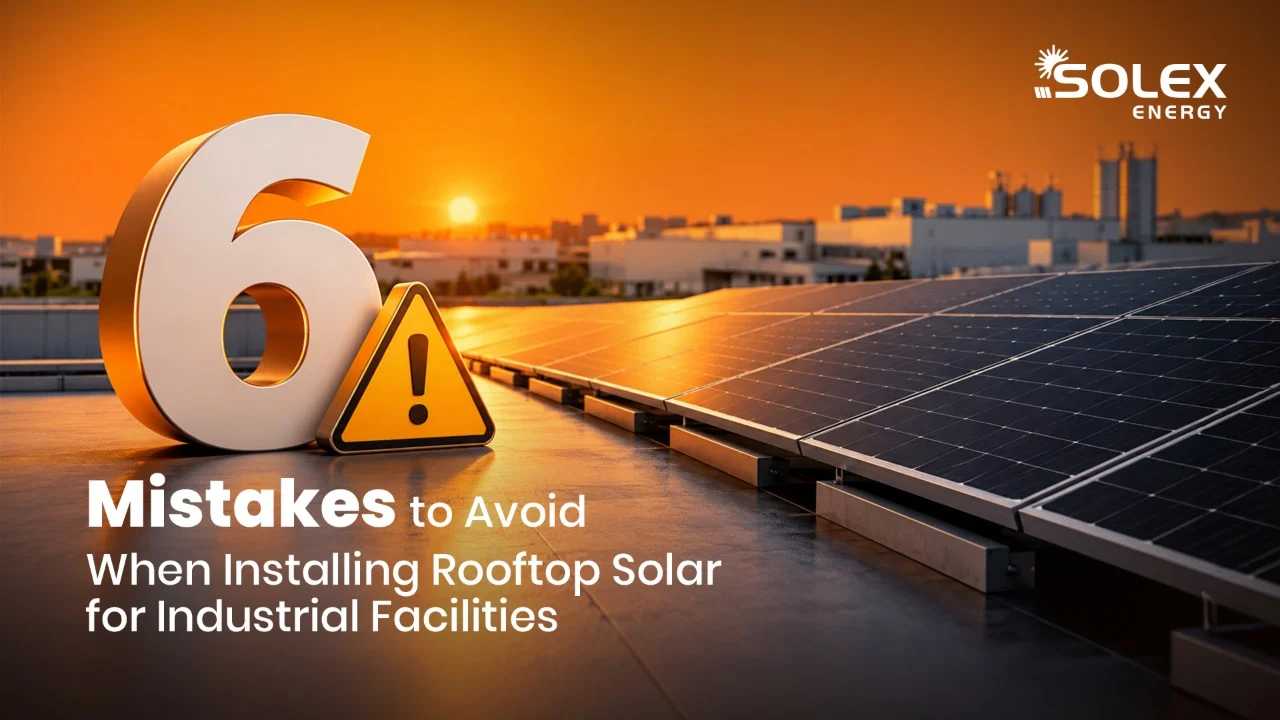
For industrial facilities, installing a rooftop solar system is more than placing solar panels on an available roof. The project has to work around the building structure, electricity requirements, operating schedules, weather conditions, safety standards, and long-term maintenance needs.
A well-planned rooftop system can help industries reduce dependence on grid electricity and manage energy costs over the long term. However, mistakes during planning or installation can affect generation and reduce expected Solar Power efficiency.
Here are six common mistakes industrial facilities should avoid when planning a rooftop solar project.
1. Ignoring the Condition of the Roof
Things you should look at before installing the panels include the roof. The roof of an industrial building can be quite aged, have subsidence issues, and have poor drainage, and the roof can be worn.
Having a solar system without taking a good look at your roof first is asking for trouble. Moving and taking back up the panels for repairs to the roof can increase project cost.
Before starting an industrial rooftop solar project, the EPC team should evaluate:
- Roof age and remaining life
- Load-bearing capacity
- Waterproofing condition
- Drainage and water accumulation points
- Existing equipment and structures
- Access for installation and maintenance
The solar system should be planned around the roof rather than treating the roof as an afterthought.
2. Designing the System Without Studying Energy Consumption
No two industrial sites utilize the same levels of electricity. A processing plant running with multiple shifts will require a variation of energy from a warehouse.
In some cases, just doing a last-upgrade to the maximum capacity will not necessarily yield this financial result. Consumption data is recommended to be analysed before the selection of a final system design.
Old and current electricity bills, peak demand, running hours, seasonal variations, and future expansion plans also provide valuable information for sizing the system.
What makes for good design? A good design will ask one fundamental question, like, ‘How will the solar plant meet the facility’s actual needs?’
3. Choosing Panels Only on Price
Module selection can have a direct effect on long-term generation. Choosing panels solely because they have a lower upfront cost can become expensive if their efficiency, degradation characteristics, or performance under local conditions are not suitable.
For industrial applications, businesses should compare factors such as:
- Module efficiency
- Temperature coefficient
- Degradation rate
- Warranty terms
- Mechanical strength
- Product certifications
- Manufacturer reliability
Modern module technologies can help industrial facilities make better use of available rooftop space. Solex Energy offers advanced module technologies, including N-Type TOPCon and dual-glass modules, designed for different commercial and industrial applications.
Selecting the right technology can support better Solar Power efficiency over the operating life of the project.
4. Overlooking Shading and Roof Layout
You should make sure the entire array is unshaded. Even the best panel in the world won’t produce anywhere near its rated output if the array is partly in the shade.
Industrial rooftops may have water tanks, ventilation equipment, chimneys, ducts, parapet walls, cooling towers, and many more things. These can be shaded on the module at various times of the day.
As regards the installation of industrial solar panels, the design group should undertake a thorough survey of the site and analyse how shadow patterns will change in the year.
Proper layout planning should consider:
- Nearby buildings and structures
- Parapet heights
- Equipment placement
- Panel orientation and tilt
- Row-to-row shading
- Maintenance pathways
A small amount of additional planning at the design stage can prevent avoidable generation losses later.
5. Treating Installation as the Final Step
A solar project does not end when the panels are mounted. Electrical connections, inverter installation, cable routing, earthing, protection systems, monitoring, and commissioning all need careful attention.
Poor installation practices can affect safety as well as system performance.
The installation team should follow appropriate engineering practices for:
- DC and AC cable management
- Earthing and lightning protection
- Inverter placement
- Module mounting
- Electrical isolation
- Fire and workplace safety
- System testing before commissioning
That’s why it pays to choose an expert EPC partner. An EPC will be able to understand the module technology but also how the project is executed and manage the various phases accordingly.
Solex Energy offers EPC solutions for various solar projects, including project design, engineering, installation, commissioning and other project requirements, so that industrial clients can view rooftop solar installations as a comprehensive set of assets, rather than in isolation.
6. Forgetting About Maintenance After Installation
A second mistake is not planning for maintenance until the problem happens.
Module surfaces and other system parts can become soiled over time with dust, industrial pollution, weather and debris. Periodic inspections and cleaning may be necessary.
A practical maintenance plan should include:
- Periodic module cleaning
- Electrical inspections
- Inverter checks
- Cable and connector inspection
- Monitoring of generation data
- Preventive maintenance
- Performance comparison against expected output
Monitoring is particularly useful because an unexpected drop in generation can indicate a developing issue.
Make the Rooftop Solar Investment Count
Industrial solar is a large investment. The first step and key to successful integration of solar power is getting the design, technology, installation and maintenance process right.
Resolving these six errors can lead to greater use of rooftop space in the industry and enhanced efficiency of solar power, avoiding unwanted operational issues.
Combining our project execution experience as an EPC contractor and solar module manufacturing experience, SFX is committed to making the industrial solar roof farm route easier for companies. Each step from selecting the right technology to installing industrial solar panels should be carefully planned, because the decisions taken pre-commissioning could impact the system for years to come.
FAQs
1. Why should industries inspect the roof before solar installation
Roof inspection helps identify structural, waterproofing, drainage, and maintenance issues before installing the solar system and prevents future complications.
2. How does energy consumption affect industrial solar system design
Studying electricity usage helps determine suitable system capacity based on operating hours, peak demand, seasonal variations, and future energy requirements.
3. Why is shading important during industrial solar panel installation?
Shading from equipment, buildings, parapets, or nearby structures can reduce generation and negatively affect overall solar system performance.
4. How can industries maintain Solar Power efficiency after installation?
Regular cleaning, electrical inspections, inverter checks, performance monitoring, and preventive maintenance can help maintain system efficiency over time.