
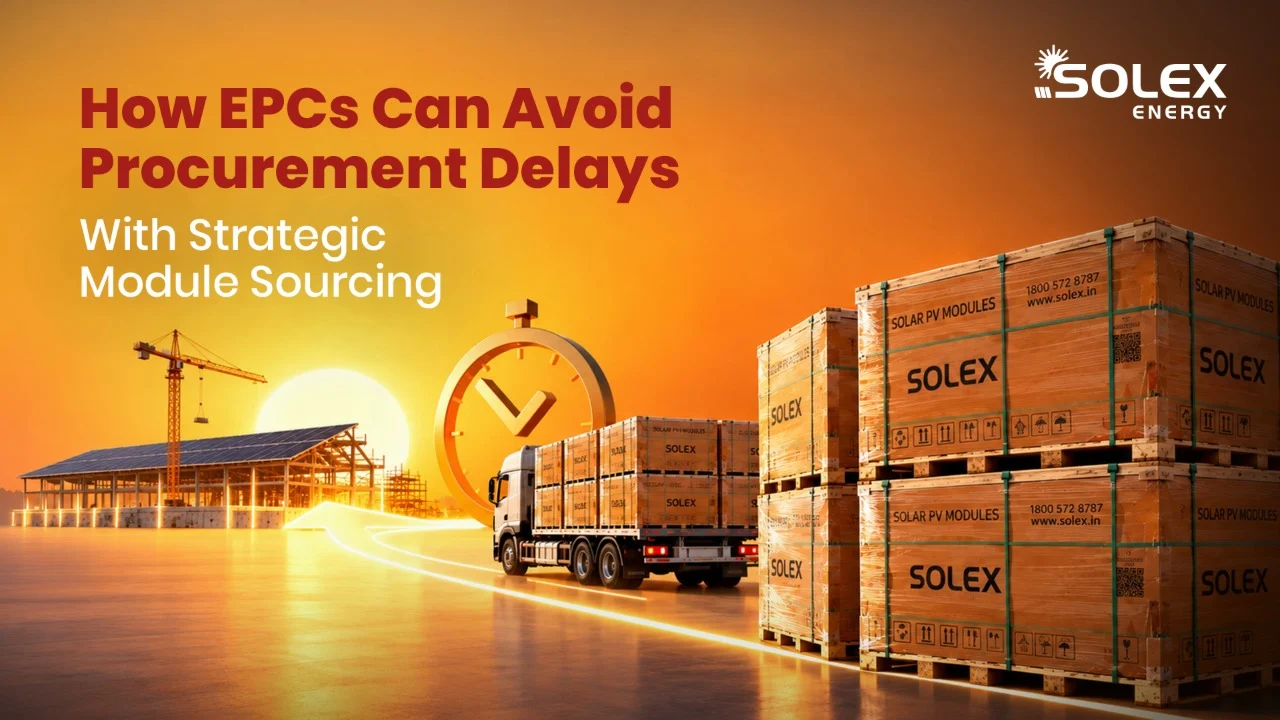
For a solar project, procurement is often where a carefully planned timeline can start slipping. A delay in modules can hold up installation, labour schedules, commissioning, and ultimately the project’s expected generation date. For EPC companies working on commercial, industrial, or utility-scale projects, solar panel procurement is therefore much more than simply finding a supplier offering the right price.
A sourcing strategy helps EPCs reduce schedule and budget impacts of sourcing delays and avoid supply chain issues. With the rise in demand for solar energy, EPC project execution is increasingly dependent on a well-defined module sourcing strategy.
Why Module Procurement Can Become a Bottleneck
The most vital component of any PV project is the PV modules. Other work may be held up if delivery of the modules is not within the expected window, even when the site, manpower and supporting hardware are all ready to go.
Several factors can contribute to procurement delays:
- Unclear project requirements during the initial ordering stage
- Limited availability of specific module technologies or capacities
- Manufacturing and production schedules
- Transportation and logistics issues
- Certification or compliance requirements
- Sudden changes in project specifications
- Dependence on a single supplier
- Poor coordination between engineering and procurement teams
This is why solar EPC procurement needs to begin much earlier than the actual installation stage.
Start Procurement Planning Alongside Engineering
One common mistake is treating procurement as a step that begins only after the engineering work is completely finished. In reality, EPC teams can save valuable time by coordinating engineering and procurement from the early stages.
Once the project’s basic requirements are understood, teams can start evaluating:
- Required project capacity
- Preferred module technology
- Module wattage and dimensions
- Site-specific technical requirements
- Applicable certifications and compliance requirements
- Expected delivery schedule
- Transportation and storage requirements
This gives procurement teams enough time to identify suitable manufacturers and understand their production capacity before placing the final order.
Work With Manufacturers That Can Support Project Scale
The supplier’s ability to fulfil an order is just as important as the module specifications. EPC companies should look beyond product brochures and evaluate the manufacturer’s production capabilities, quality systems, delivery record, and ability to handle larger or recurring requirements.
A manufacturing partner with established production infrastructure can provide better visibility into production schedules. It can also make communication easier when an EPC has multiple projects running simultaneously.
This is one sector where a combined manufacturing and EPC ecosystem can be beneficial. Solex Energy integrates solar module manufacturing with end-to-end EPC to provide EPC clients and project developers a complete package.
Don’t Let Price Be the Sole Measure in Purchasing
A cheap module price may sound good when you are trying to buy the product, but the project implications may negate it.
A lower-cost module that is delivered late may lead to increased labour, equipment, storage and project management costs. Likewise, one that is of variable quality could cause inspection or performance problems further down the line.
A more practical procurement evaluation should consider:
- Product quality and technology
- Manufacturing capacity
- Delivery timelines
- Certifications and compliance
- Warranty terms
- Supplier reliability
- Technical support
- Total project cost
The goal should be consistent project execution rather than the lowest purchase price.
Build a Supplier Strategy, Not Just a Supplier List
Having several supplier names in a database does not necessarily mean an EPC has a resilient procurement strategy. Suppliers should be evaluated before the project reaches a critical procurement stage.
EPCs can maintain a supplier assessment covering:
- Production capacity
- Historical delivery performance
- Product portfolio
- Quality assurance systems
- Location and logistics access
- Financial and operational stability
- Ability to support future projects
Solex, for example, operates an Industry 4.0-enabled manufacturing facility and offers multiple module technologies, including N-type TOPCon and dual-glass options. Its manufacturing capabilities are supported by automated processes and in-house testing infrastructure.
Keep Communication Between Teams Continuous
You may not be the supplier of the cause of delays. Procurement delays are not always the supplier’s fault. Sometimes the issue is those dreaded changes to the project.
A pre-order can be changed owing to system capacity, size of modules, layout or technical specs. The process, project management, buying and the manufacturer shall be in sync when implementing the project.
These accelerators can help teams to identify issues early on before they even threaten the schedule.
Get Strategic Sourcing for Your Solar EPC Order
EPC companies will need to treat procurement more as a strategic function than just a procurement activity. The qualification of the manufacturer, supplier management and facilitation, early planning and schedule definition and achievable schedule can all contribute to project predictability.
A tool partner for the right module may also make things easier by assisting EPCs away from the product. Solex Energy handles manufacturing modules and EPCs in the design, engineering, execution, and asset management.
As the solar energy industry continues to grow, more successful EPCs will be those that have better procurement strategies that can hit project deadlines and reliably deliver solar power. Good solar panel procurement is simply a matter of having the right product from the right manufacturing source at the right time.
FAQs
1. How critical is strategic module sourcing to EPC companies?
Strategic sourcing allows EPC organizations to cut down on delays in their procurement process, to use their supply risks to their advantage, to stay on schedule with their projects, and to keep a check on project costs.
2. What factors should EPCs consider when choosing module suppliers?
Manufacturing capacity, quality standards of the product, certification, delivery time, warranty, stability of suppliers, and technical support.
3. How can EPCs cut down delays for solar panels?
EPCs can mitigate delays by: early procurement planning, crystallised specifications, supply selection, ongoing communication, and reasonable delivery dates.
4. Why should EPCs work with experienced solar module manufacturers?
Provide an experienced resource with high production capability, quality assurance, technical knowledge, better delivery awareness, and support on large production projects.